

The Article
Artificial Intelligence Is Moving From the Student's Laptop Into Education Policy
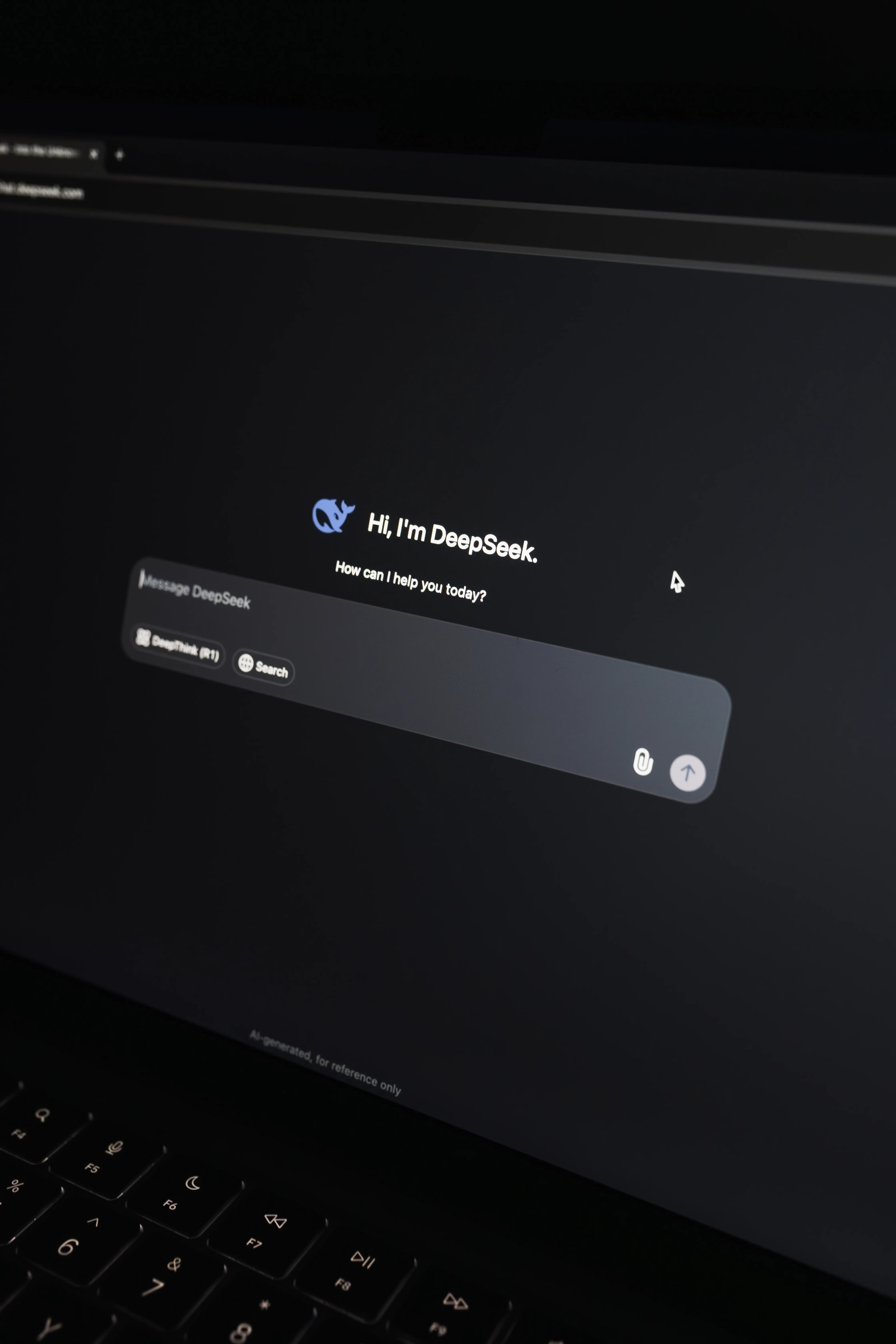
For the past several years, artificial intelligence in education has largely been discussed as a problem students and teachers would have to figure out themselves.
That period is beginning to end.
In June 2026, the California Department of Education released a model policy for artificial intelligence in education designed to help school districts and charter schools establish their own rules around the technology.
The significance is larger than whether students should be allowed to use an AI assistant to help with an assignment.
California is beginning to treat AI literacy as part of preparing students for the environment they will eventually enter.
State guidance encourages schools to think about artificial intelligence through several dimensions, including academic integrity, privacy, equitable access, responsible use, and the ability to understand how AI systems work.
That creates a fundamentally different educational challenge.
Schools cannot realistically prepare students for an AI-enabled economy by pretending the technology does not exist.
But simply allowing students to use AI without understanding its limitations creates a different problem.
The emerging responsibility is therefore more complicated: teach students how to use increasingly powerful tools without allowing those tools to replace the reasoning students are supposed to develop.
That distinction may become one of the defining educational questions of the next decade.
California Is Putting More Money Into the System

The transformation of education is not happening only through technology.
California is simultaneously making substantial new investments in its public education infrastructure.
The state's enacted 2026–27 budget provides $2.4 billion to increase the statewide special education funding rate to approximately $1,340 per student.
Another $1 billion provides ongoing funding for California's community schools model, which attempts to connect traditional education with broader services for students and families.
The budget also provides a $5 billion Student Support and Professional Development Discretionary Block Grant.
Districts can use those resources across areas including teacher recruitment and retention, professional development, career education, community schools, and deferred maintenance.
This represents an important shift in how educational performance is increasingly understood.
A school system cannot improve solely by changing what happens during a fifty-minute class period.
Teacher availability matters.
Student support matters.
Facilities matter.
Technology matters.
And increasingly, the connection between education and what happens after education matters as well.
California appears to be investing around that broader definition.
Briarstone Assessments
What kind of careeractually fits you?
Six quick questions reveal the kind of work you may naturally gravitate toward, plus career paths worth exploring.
Possible Results
01 — 06“Your result may be more obvious than you think.”
The Path From High School to College Is Becoming More Direct

Another important change is occurring before students ever arrive on a college campus.
California is attempting to simplify how qualified students move from high school into higher education.
A new state law establishes a California State University direct admissions process that can notify eligible high school students that they qualify for automatic admission to participating CSU campuses.
The same legislation also directs California Community Colleges to develop programs intended to make transferring into four-year universities easier.
The logic is straightforward.
One of the barriers to education is not necessarily academic ability.
Sometimes it is complexity.
Applications, transfer requirements, financial aid, course selection, and uncertainty about eligibility can create friction between a student and an institution they may already be qualified to attend.
Direct admissions attempts to remove some of that friction.
The broader implication is worth watching.
Higher education may increasingly have to compete for students rather than simply requiring students to compete for higher education.
That changes the relationship.
Universities have traditionally asked applicants to demonstrate why they deserve admission.
A more competitive education market may increasingly require institutions to demonstrate why attending them is worth the student's time and money.
Community College Is Becoming More Important to California's Economic Strategy

California's community college system sits directly between two of the state's largest challenges.
Education has to remain accessible.
And employers need workers with increasingly specific skills.
The 2026–27 budget provides additional funding for community college enrollment growth, student support, credit for prior learning, workforce development, infrastructure, and other system initiatives.
The state is funding an additional 2.5 percent of enrollment growth across the 2025–26 and 2026–27 academic years.
Community colleges are also receiving a new Student Support Block Grant that can be used for services including food, housing, transportation, financial aid, counseling, and job placement.
These investments matter because community colleges increasingly occupy a strategic position that traditional universities cannot completely replicate.
They can provide the first two years of a bachelor's pathway.
They can provide technical and occupational education.
They can serve adults returning to education.
They can work directly with regional employers.
And they can often do those things at a significantly lower cost to the student.
In an economy where skills may need to be updated repeatedly over a person's career, that flexibility becomes economically important.
Related Quote
“Education is not preparation for life; education is life itself.”
— John Dewey
Briarstone Network
Stay Within the Network
Receive selected editorials, resources, perspectives, and developments from Briarstone Network directly in your inbox.
Editorials · Resources · Network Updates